Economic Watch: Middle East conflict, tariffs bring new cost pressures to U.S. consumers
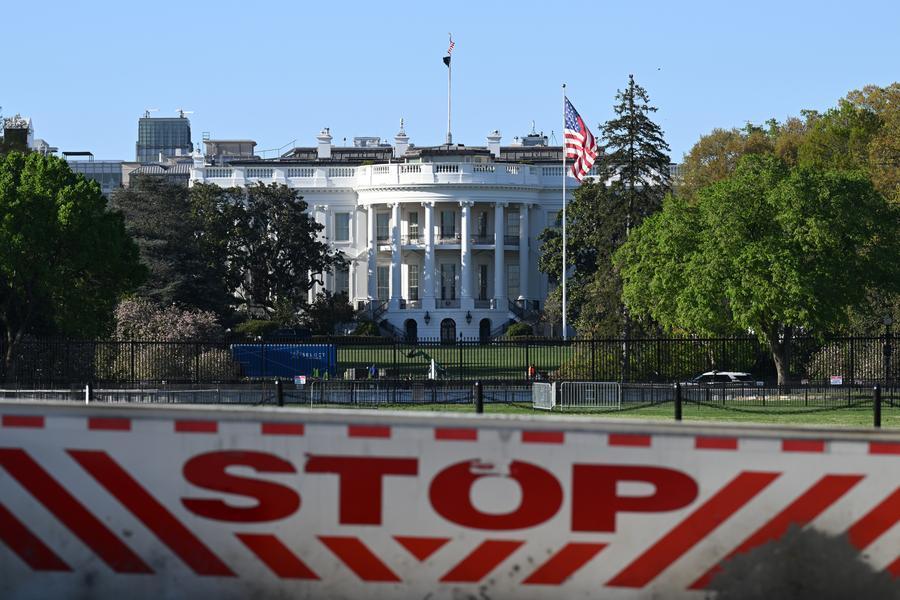
This photo taken on 福州新闻网今新闻April 7, 2026 shows a view of the White House in Washington, D.C., the United States. (Xinhua/Li Rui)
"When ships are rerouted to avoid conflict zones, it sets off a chain reaction," Port of Long Beach CEO Noel Hacegaba said. "Cargo has to move differently, routes get longer, costs go up, and ultimately consumers feel it."
by Julia Pierrepont III
LOS ANGELES, April 18 (Xinhua) -- Escalating tariffs and renewed conflict in the Middle East are rippling through the largest U.S. port complex, driving up shipping costs at the Ports of Los Angeles and Long Beach and pushing prices higher across the U.S. economy, port officials have said.
"What happens in the supply chain doesn't stay in the supply chain," Port of Long Beach CEO Noel Hacegaba said at a press briefing Wednesday. "It shows up in the prices people pay every day."
Executives at the Port of Long Beach warned that disruptions linked to tensions around the Strait of Hormuz, combined with U.S. President Donald Trump's tariffs, have made global trade routes more costly and less reliable, affecting port operations and the roughly 3 million U.S. jobs tied to port activity.
Jonathan Gold, vice president of supply chain and customs policy at the National Retail Federation (NRF), said the combined impact of geopolitical tensions and trade policy is putting pressure on retailers.
"Just because retailers don't import a lot of merchandise from the Middle East doesn't mean the U.S. supply chain isn't affected by the turmoil there," Gold said. "The supply chain is global, and disruptions anywhere along it can have ripple effects."
The Port of Long Beach faced a 5.2 percent year-on-year decline in container volumes last month. "The war in the Middle East continues to add uncertainty for global supply chains," Hacegaba said.
He said the U.S.-Iran conflict has significantly disrupted global shipping lanes. The Strait of Hormuz, which carries roughly 20 percent of the world's oil supply, has been effectively shut down or restricted, forcing vessels to reroute and pushing energy prices sharply higher.
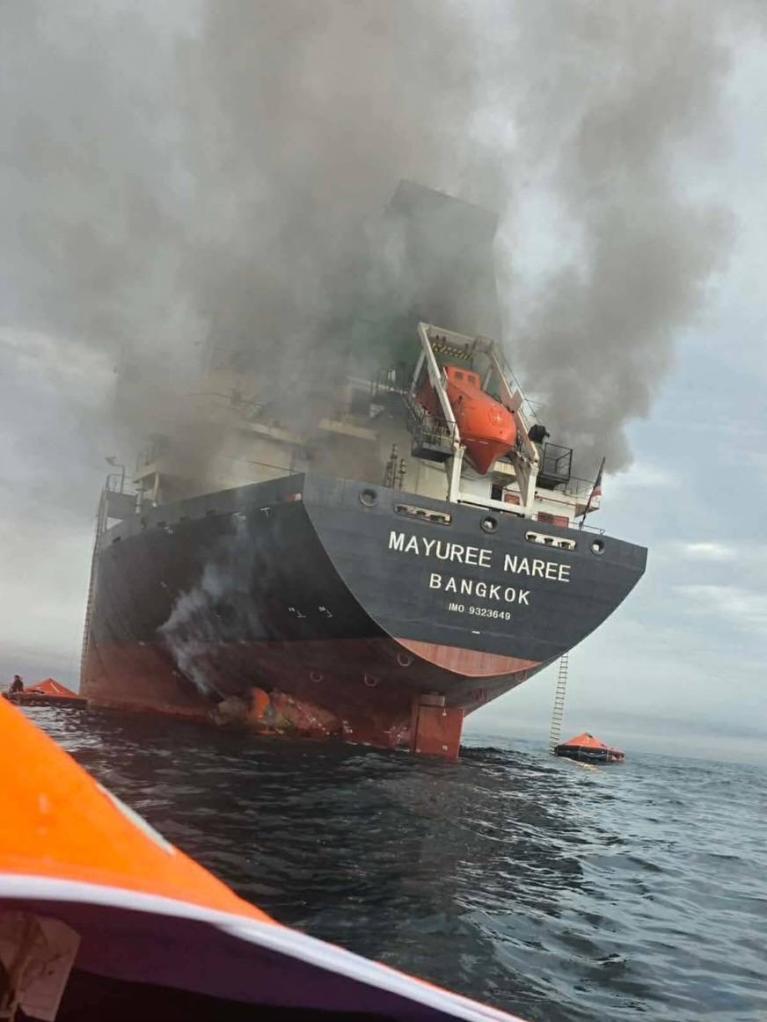
A fire breaks out on a Thai cargo ship after it was struck in the Strait of Hormuz on March 11, 2026. (Royal Thai Navy/Handout via Xinhua)
"The price of oil already hit 100 U.S. dollars a barrel for the first time in four years," Hacegaba said, adding that prices in Southern California have hovered near that level. "We're seeing gas prices rise to 6 U.S. dollars a gallon. And history tells us prices go up fast, but they come down slowly."
Energy analysts and federal agencies say the disruption is among the most severe in decades. The U.S. Energy Information Administration has warned that constraints in the Strait of Hormuz are a major driver of rising oil and gasoline prices, with spillover effects on shipping and manufacturing.
For ports, the impact is immediate. When key shipping lanes become risky or inaccessible, routes lengthen, fuel consumption rises and schedules become less reliable.
"When ships are rerouted to avoid conflict zones, it sets off a chain reaction," Hacegaba said. "Cargo has to move differently, routes get longer, costs go up, and ultimately consumers feel it."
Port officials said the fuel shock is being compounded by renewed tariffs, as importers and retailers struggle to navigate an uncertain trade policy environment.
Retailers and shippers are already experiencing fuel surcharges across ocean, trucking and parcel markets. Major ocean carriers have raised rates linked to fuel costs, while domestic carriers are following suit, Gold said.
He added that Amazon has introduced a temporary 3.5 percent fuel and logistics surcharge, the U.S. Postal Service plans an 8 percent price increase, and trucking fuel surcharges have risen by as much as 25 percent.
"For a while, shippers absorbed rising costs from fuel spikes to last year's 'Liberation Day' tariffs," Hacegaba said. "That's no longer the case today. Those costs are being passed along across the board to consumers."
The NRF's latest Global Port Tracker projects that imports at major U.S. container ports will remain below last year's levels through at least mid-2026, reflecting cautious inventory strategies and ongoing policy uncertainty.
For now, port leaders warn that as long as tariffs remain unsettled and geopolitical tensions continue to disrupt global energy markets, elevated costs are likely to persist -- with consumers ultimately bearing the burden.
本文地址:https://vlwez.rhd41v.cc/html/75e53199393.html
版权声明
本文仅代表作者观点,不代表本站立场。
本文系作者授权发表,未经许可,不得转载。